

We Are All Concerned
When we talk about the water crisis, we often think of distant images: children walking kilometers to fill a jerrycan, dried-up rivers in sub-Saharan Africa, Himalayan glaciers melting. It's real. But the water crisis also begins in your home, in your faucet.
At the global level
Glaciers are melting at an alarming rate: since 1900, they have lost more than 25% of their volume. The Alps have seen half of their glacier surfaces disappear in 150 years. These natural reservoirs fed 1.9 billion people.
By 2050, global demand for fresh water is expected to increase by 55% while reserves are dwindling. Result: conflicts over rivers, climate migrations, health crises.
In Europe itself, 44% of water bodies are not in good ecological status, according to the European Environment Agency. Hardness is generally measured in °fH (French degrees) or in mg/L of CaCO₃. A threshold often considered "hard" is above 20 °fH.
At the individual level
Each Belgian or French resident consumes an average of 150 liters of water per day — running water, shower, kitchen, toilets, gardening. This water must be captured, treated, distributed, then treated again.
Yet, much of this water is wasted or poorly treated: defective toilets, leaking faucets, energy-intensive appliances clogged with scale. Not to mention bottled water: 50 billion plastic bottles produced each year for water we could treat directly from the tap.
Preserving water: why every drop matters
Preserving water does not simply mean 'turning off the faucet while brushing your teeth'. It is a comprehensive approach that touches on the quality of water we consume, the quantity we use, and the impact of our consumption on natural resources.
Good daily habits
Beyond equipment, simple gestures can immediately reduce consumption:
- Shower instead of bath: 60 liters vs 150-200 liters.
- Turn off the faucet while brushing teeth or washing dishes by hand.
- Collect rainwater for the garden and outdoor uses.
- Repair leaks: a worn joint can cost 12,000 liters per year.
- Run the washing machine and dishwasher at full capacity
- Water in the evening to limit evaporation.
These gestures are essential. But they are not enough. To sustainably preserve the water resource, you also need to equip yourself with installations capable of treating, purifying, and saving water at the source — at home.
Equipping yourself to preserve water: our solutions
Water treatment technologies have existed for decades. But they have never been more accessible, efficient, and essential than today. Here's how each solution directly contributes to water and environmental preservation.
1. The osmosis system — The purest water, without bottles
Reverse osmosis is the most advanced filtration technology available at residential and professional scale. Water is forced through a semi-permeable membrane with pores of 0.0001 microns — 500 times finer than a human hair.
Result: up to 99% of contaminants are eliminated — nitrates, pesticides, microplastics, heavy metals, pharmaceutical residues, fluorides, excess limescale.
Examples of 2 types of osmosis systems:
Biomimicry in service of pure water
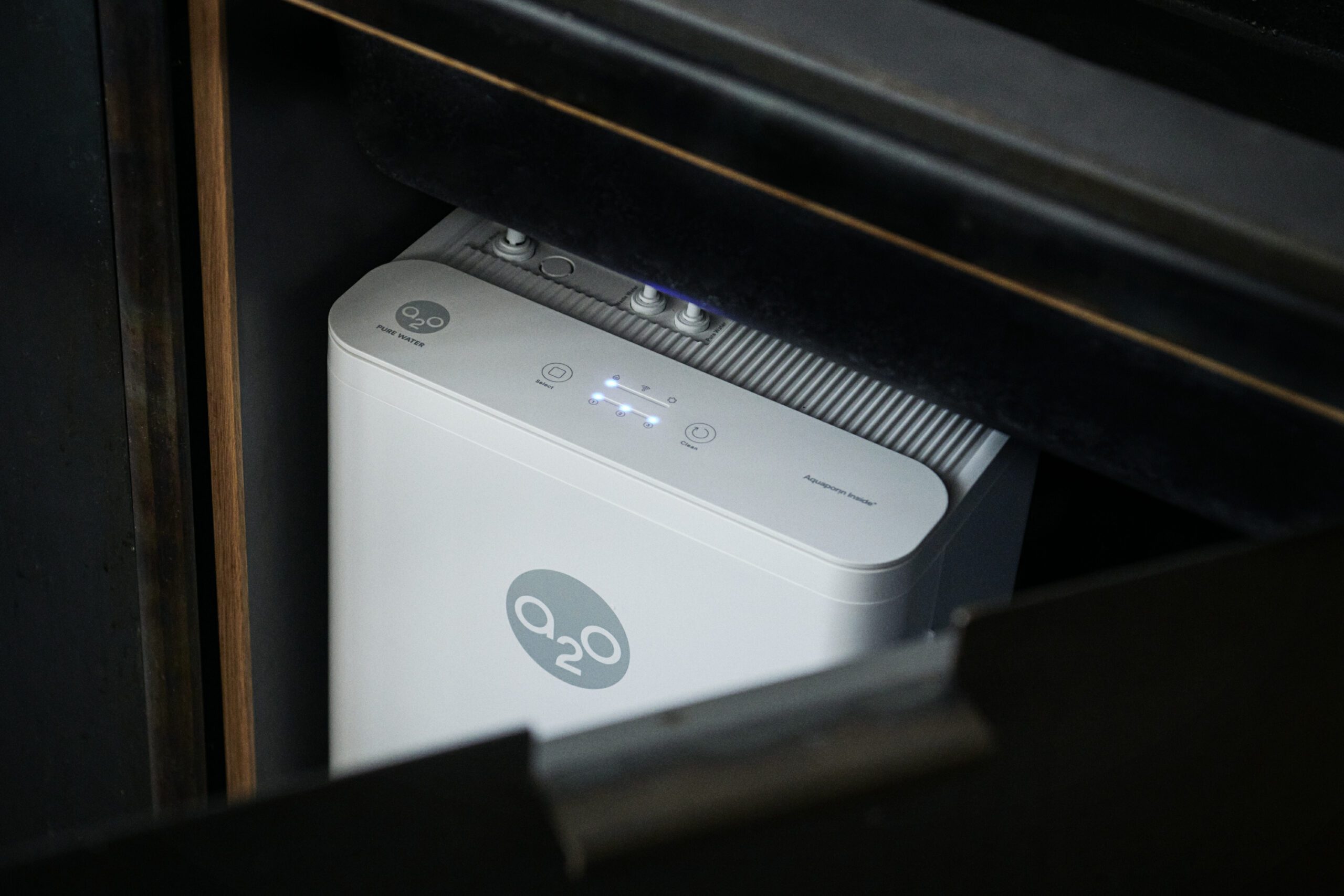
Technology inspired by natural aquaporin proteins (natural water cell channels). Exceptional efficiency, low rinse water waste compared to standard osmosis systems. Available in under-sink (A2O Pure) or professional version. Ideal for drinking water, cooking, hot beverages.
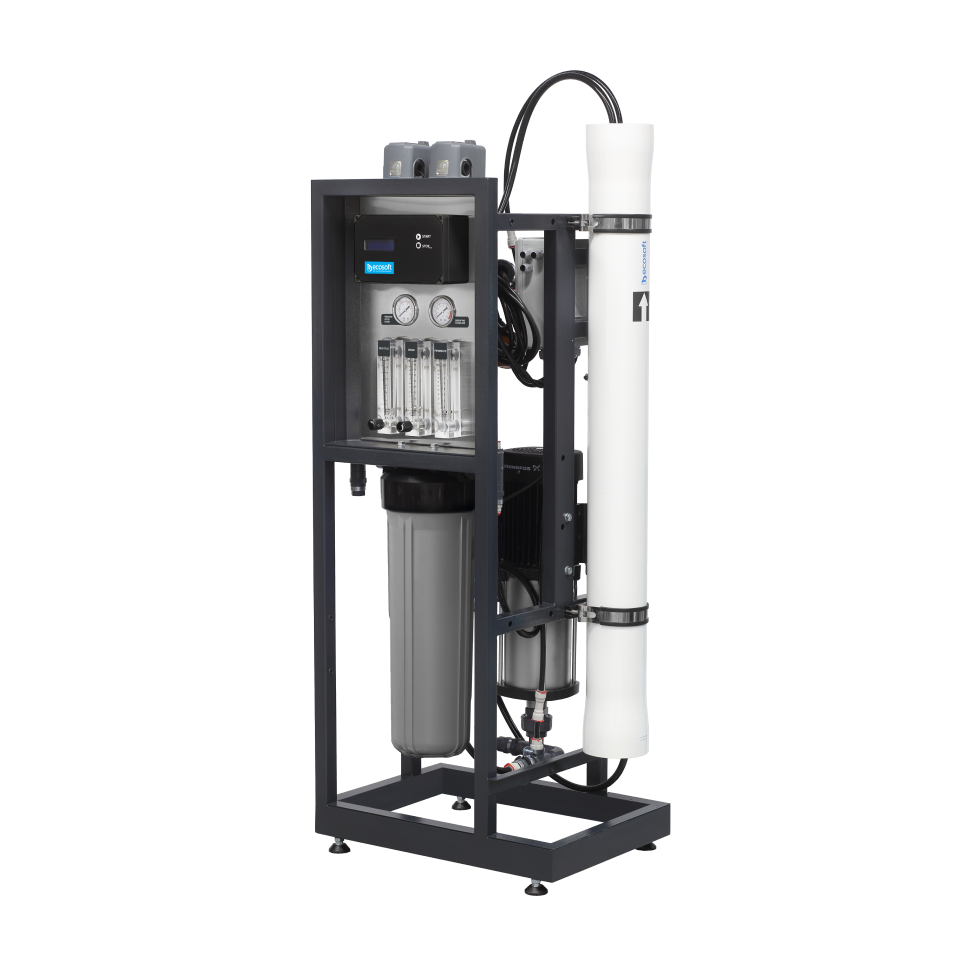
For demanding professionals
Restaurants, hotels, food industry, laboratories, communities. Ultra-pure water production continuously, flows adapted to the most important needs. Certified, controlled, durable.
2. The water softener — Save energy by treating water
Hard water (limescale) is an invisible but costly problem. A 1 mm layer of limescale in a water heater is enough to increase its energy consumption by 10%. At 3 mm, it's +25%. At 5 mm, the device can be irreparable.
The water softener transforms calcium and magnesium ions responsible for limescale into harmless sodium ions. Direct consequences: devices that last longer, consume less energy, and softer water for skin and hair.
|
A water softener can reduce energy consumption of water heating devices by 15 to 30% — which also represents indirect water savings, as less energy = fewer resources mobilized in the production chain. |
Softness and longevity for your installations
Complete range of residential and professional softeners. Automatic regeneration programmable based on actual consumption. Low salt consumption. Compatible with all installations, from individual homes to large buildings. Simple maintenance, maximum durability.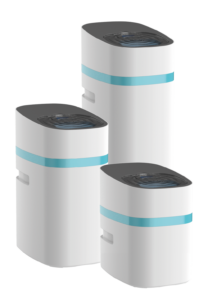
3. Filters and filtration media — Treat at the source
Filtration is the first line of defense between network water (or well water) and your faucet. It can target very specific problems: residual chlorine, iron, manganese, suspended solids, pesticides, microorganisms...
Two complementary approaches: POE (Point of Entry) systems that treat all water entering the building, and POU (Point of Use) systems installed at the precise consumption point.
Why filter?
Filtering your water from the faucet is:
- Eliminate undesirable residues without demineralizing
- Preserve the natural quality of water
- Avoid plastic bottles
- Protect downstream equipment
- Reduce maintenance costs
- Adapt treatment to each source
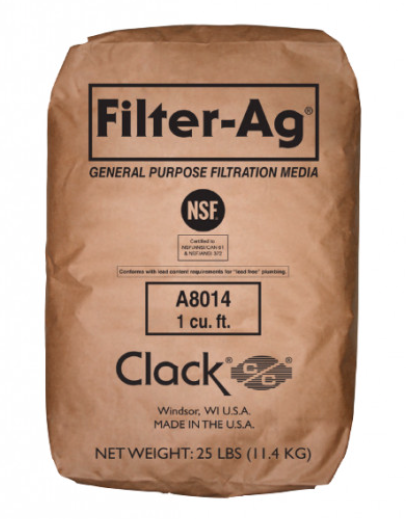
Complete range of filtration media & POE/POU systems
A solution for each water problem
Under-sink filters, standing filtration columns, global filtration systems. Personalized advice based on water analysis. Wide choice of media adapted to each problem. Residential and professional.
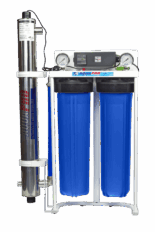
4. UV sterilization — Disinfection without chemicals
Well, borehole, or river water can contain dangerous bacteria, viruses, and parasites — even if it appears clear. UV sterilization is the most ecological and effective solution to guarantee water microbiological safety without any chemical product.
UV-C rays destroy microorganism DNA at 99.99% effectiveness, without leaving residue, without modifying water taste or pH. No chlorine, no biocide is released into the environment.
5. Tanks. Preserved water, available when needed
With climate disruption, drought episodes and water restrictions are multiplying. Storing treated water becomes a preventive and responsible approach. Tanks make it possible to build a reserve of purified water, immediately available, with guaranteed quality.
In combination with a osmosis system or filtration system, a pressurized tank ensures constant flow even during consumption peaks — and reduces pressure on drinking water networks during critical periods.
Conclusion:
Equipping yourself is an act for water
Every individual and professional decision counts.
- Install an osmosis system means reducing 100% your plastic bottle consumption.
- Softening water means extending the lifespan of equipment and reducing energy consumption.
- Filtering at the source means preventing contaminants from ending their course in groundwater after passage through treatment plants.
- Disinfecting without chemicals means not releasing chlorine or biocides into aquatic environments.
- Storing treated water means anticipating drought episodes and reducing pressure on drinking water networks.

Act for water starting today
Osmosis Systems · Water Softeners · Filters · UV Sterilizers · Tanks
 Discover all our products to act for water at DIMM,
➡️ Contact DIMM for a personalized technical study of your anti-limescale project.
Published inBlog