

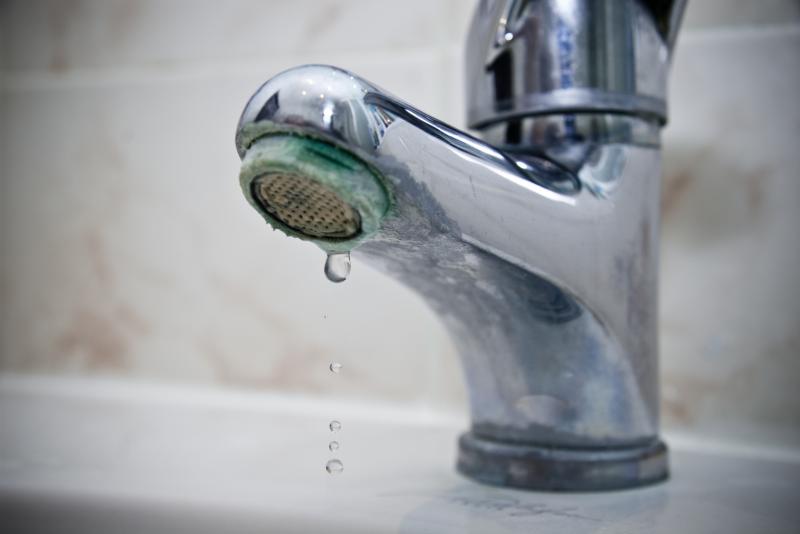
Limescale — often seen as merely a domestic nuisance — is now at the center of several technical, economic, and environmental concerns. In 2025-2026, new data, regulatory developments, and innovations in water treatment confirm that water hardness remains a key issue for individuals, professionals, and network operators.
Limescale in water corresponds to the presence of salts of calcium and magnesium. These ions are not pollutants strictly speaking, but their accumulation (in the form of tartar) poses tangible problems:
deposits in plumbing,
reduced effectiveness of heating equipment,
excess energy consumption,
more frequent maintenance.
Hardness is generally measured in °fH (French degrees) or mg/L of CaCO₃. A threshold often considered "hard" is above 20 °fH.
Recent Trends in Water Hardness (2025-2026)
1. Average Hardness Stable but Highly Variable by Region
European data shows that:
several areas of Northern France, Belgium (Flanders/Wallonia), and Germany frequently exceed 25 °fH.
certain southern and eastern regions have naturally softer water.
This variability requires precise local analysis before any equipment decision.
3. Growing Awareness Among Professional Users
Plumbing trade unions and major accounts report an important point:
"An installation optimized against limescale can reduce energy consumption related to domestic or industrial heating by at least 12%."
This translates into increased competency among technical decision-makers on hardness treatment and growing demand for integrated solutions.
.
Impacts of Limescale in 2026: More Than a Simple "Nuisance"
Increased Energy Consumption
Limescale deposits insulate resistances in water heaters and boilers. According to several recent technical studies:
A 2mm deposit can increase energy consumption by 15% to 25% for a standard household water heater.
More Frequent Maintenance and Associated Costs
In 2025-2026, field feedback shows that:
untreated systems require on average 2 to 3 times more descaling interventions,
appliances (dishwashers, washing machines, sanitary installations) have a lifespan reduced by 20% to 30%.
Industries & Tertiary Buildings: Major Issues
In professional environments:
✔ Cooling towers more prone to encrustation,
✔ reduced efficiency of heat exchangers,
✔ shorter maintenance cycles.
These impacts have prompted many operators to include anti-limescale treatment in multi-year investment plans.
New Treatment Recommendations (2025-2026)
1. Systematic Hardness Diagnosis
Before any installation, it is now recommended — and sometimes required by specifications — to perform:
📌 A local hardness analysis,
📌 a mapping of critical points,
📌 an estimate of actual needs.
This approach guarantees precise sizing of technical solutions.
2. Modern Treatment Solutions
Modern installations go beyond simple softeners:
Smart Volumetric Softeners
→ Regeneration based on actual consumption rather than fixed duration.
Connected Sensors + Remote Monitoring
→ Allow avoiding unnecessary regenerations and optimizing media lifespan.
Integrated Compact Solutions
→ For tertiary buildings, collective buildings, and small industrial sites.
Regulatory Focus 2025-2026
🇪🇺 Europe
The revised drinking water directive (Directive (EU) 2020/2184) does not set regulatory limits on hardness (as it is not a health contaminant), but strongly encourages measurement and monitoring of organoleptic parameters and comfort-related factors.
This translates into technical recommendations in best practices from concessionaires and network managers.
🇫🇷 France
Several major concession contracts now require a tartar management plan, including:
📌 Periodic hardness measurement,
📌 Consumer monitoring indicators,
📌 Energy optimization strategies.
🇧🇪 Belgium
In Belgium, some regions are implementing subsidies or aid for the installation of efficient softeners in homes and collective buildings, aiming to encourage:
✔ water savings,
✔ reduced energy costs,
✔ optimization of technical installations.
Best Practices in 2026 Against Limescale
✔ Perform initial hardness analysis before any installation.
✔ Prefer smart volumetric softeners over chronometric ones.
✔ Integrate a connected monitoring system to anticipate maintenance.
✔ Think holistically about energy and health impacts.
✔ Adapt installation according to actual usage profile (household, industry, tertiary).
Trends to Follow
Digitalization of Treatment
Anti-limescale treatment solutions increasingly rely on:
📍 IoT Sensors
📍 Remote Monitoring Platforms
📍 Anticipatory Resin Saturation Detection
→ Toward predictive maintenance, more efficient and less costly.
Sustainable Approach
Limescale treatment is now linked to environmental objectives:
reduction of overall energy consumption,
reduced rejections into public networks,
optimization of installation lifecycle.
Conclusion: Limescale, a Permanent but Manageable Issue
In 2025-2026, limescale remains a major concern for water managers, installers, and maintenance professionals. Thanks to new data, integration of connected technologies, and smarter treatment approaches, it is now possible to:
➡️ optimize operating costs,
➡️ extend equipment lifespan,
➡️ ensure lasting comfort for users.
Want to Optimize Your Limescale Management?
At DIMM, we support professionals in:
analyzing local hardness,
choosing appropriate anti-limescale solutions,
sizing and installation,
connected monitoring and maintenance.
➡️ Contact DIMM for a personalized technical study of your anti-limescale project.
Published inBlog