


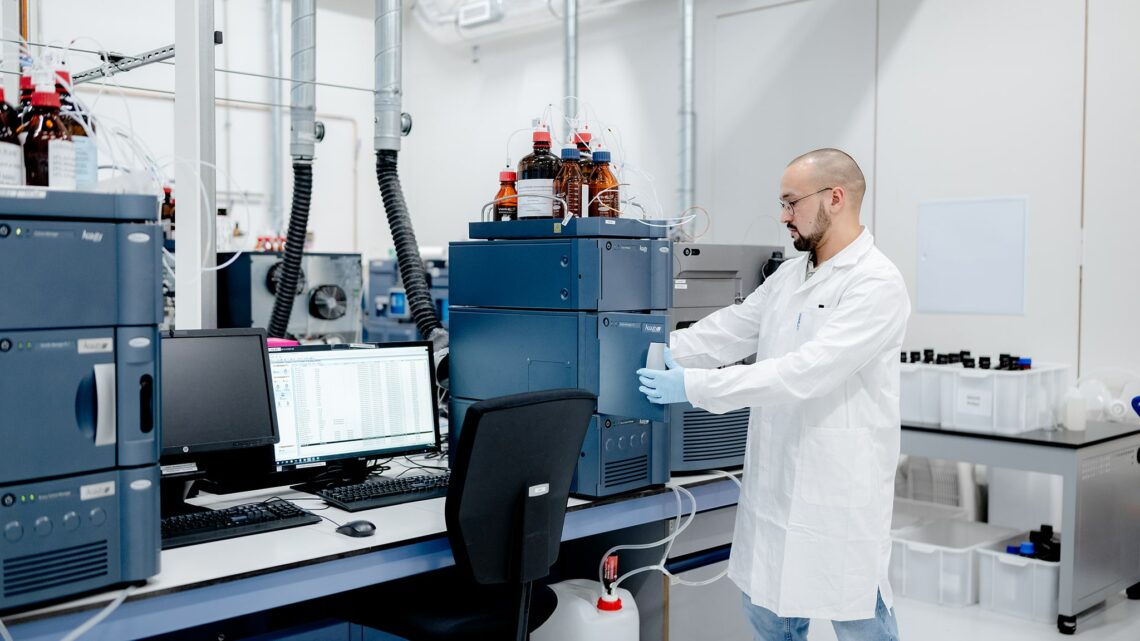
PFAS monitoring has intensified in 2025-2026 in Belgium and France. Beyond the debates, recent figures confirm frequent detection of multiple compounds in water networks, with regulatory obligations now harmonized at the European level. For operators, municipalities, and industries, the challenge is twofold: compliance and control of operating costs through appropriate treatment solutions.
-
Entry into force of European limits (January 2026):
-
0.1 µg/L for the sum of 20 specific PFAS;
-
0.5 µg/L for the sum of all measured PFAS (Directive (EU) 2020/2184 transposed).
-
-
France – 2025 national campaigns: detection of at least 11 regulated PFAS in networks; notable detection frequencies for PFHxS (~20%) and PFOS (~19%) according to recent public summaries.
-
TFA (trifluoroacetic acid): detected in a large majority of samples (magnitude >80% in some campaigns), generally below thresholds, but under increased surveillance.
-
Belgium: regional threshold set at 100 ng/L for the sum of 20 PFAS, with enhanced reporting and systematic controls.
These data show a diffuse presence of PFAS, even when values remain compliant. The trend is toward increased frequency of analyses and finer monitoring by watershed.
Impacts for networks and professional installations
Strengthened analysis plans: more sensitive LC-MS/MS methods, increased frequency, traceability.
Risk management of exceedances: alert procedures, communication, rapid corrective measures.
Optimization of treatment processes: addition of adsorptive or membrane stages.
Operating costs: trade-off between CAPEX (investment) and OPEX (consumables, energy).
For office buildings, hospitals, food industries, or municipal networks, stability of residual hardness and control of micropollutants become full performance indicators.
What technologies actually work against PFAS?
Since PFAS are highly persistent, conventional treatments (simple mechanical filtration) are insufficient. Effective processes rely on:
1) Granular Activated Carbon (GAC) – Targeted adsorption
Excellent effectiveness on many long-chain PFAS.
Sizing based on mass loading and contact time (EBCT).
Requires breakthrough monitoring and planned replacement.
Applications: modular units at plant exit, containerized for municipalities, final polishing in industry.
2) Reverse Osmosis (RO) – Membrane barrier
High retention of a broad spectrum of PFAS (including shorter-chain compounds).
Possible integration in industrial skid with appropriate pre-treatment (antiscalant, fine filtration).
Concentrate management required.
Applications: sensitive process water, point-of-use protection, high-purity water production.
3) Specialized ion exchange
Selective resins for PFAS, effective for polishing.
Sensitive to ionic competition; precise sizing required.
Applications: complementary to GAC or RO to achieve strict thresholds.
Recommended strategy: multi-barrier approach
In practice, best performance is often achieved through a combination:
Pre-treatment (fine filtration, turbidity control),
GAC for primary adsorption,
RO or selective resin for polishing,
Continuous monitoring (TDS, differential pressure, PFAS sampling plan).
This approach ensures compliance, reduces exceedance risks, and optimizes media lifespan.
Integrating DIMM solutions into your PFAS process
As a water treatment specialist, DIMM supports professionals with:
Industrial GAC skids sized according to flow and target EBCT;
Custom reverse osmosis systems (integrated pre-treatment, antiscalant, CIP);
Selective resin modules for PFAS polishing;
Audit and analysis plan compliant with 2026 requirements;
Preventive maintenance contracts (breakthrough monitoring, media replacement, OPEX optimization).
Objective: ensure lasting compliance while controlling operating costs.
Costs and ROI: act now to avoid overruns
European studies estimate that failure to manage PFAS could represent hundreds of billions of euros by 2050 (healthcare, remediation, economic losses). At the scale of a network or industrial site, an exceedance can generate:
Operational shutdowns,
More costly emergency work,
Reputational impact and communication obligations.
Proper upstream sizing and an appropriate process allow ROI optimization and avoid corrective interventions.
Best practices 2026 for operators
Update PFAS monitoring plan (20 regulated substances).
Conduct hydraulic audit and mass loading analysis.
Deploy multi-barrier solution suited to peak flow.
Contractualize maintenance with breakthrough monitoring.
Plan concentrate management (in case of RO).
Conclusion
2025-2026 data confirms diffuse presence of PFAS in networks, with an increasingly demanding regulatory framework. For professionals, the priority is clear: ensure compliance and stabilize performance through proven technologies (GAC, RO, selective resins) and rigorous analytical monitoring.
PFAS project in progress or audit to schedule?
DIMM teams support you in analyzing, sizing, and integrating high-performance solutions against PFAS.
Contact DIMM for a personalized technical study and an action plan compliant with 2026 requirements.