

Two technologies, one goal: produce clean water that meets standards. But their differences are significant, and making the wrong choice can be costly—in maintenance, compliance, or treatment quality.
This article gives you the keys to understand, compare, and decide between reverse osmosis (RO) and ultrafiltration (UF), based on your actual use case.
1. Operating Principles
Reverse osmosis
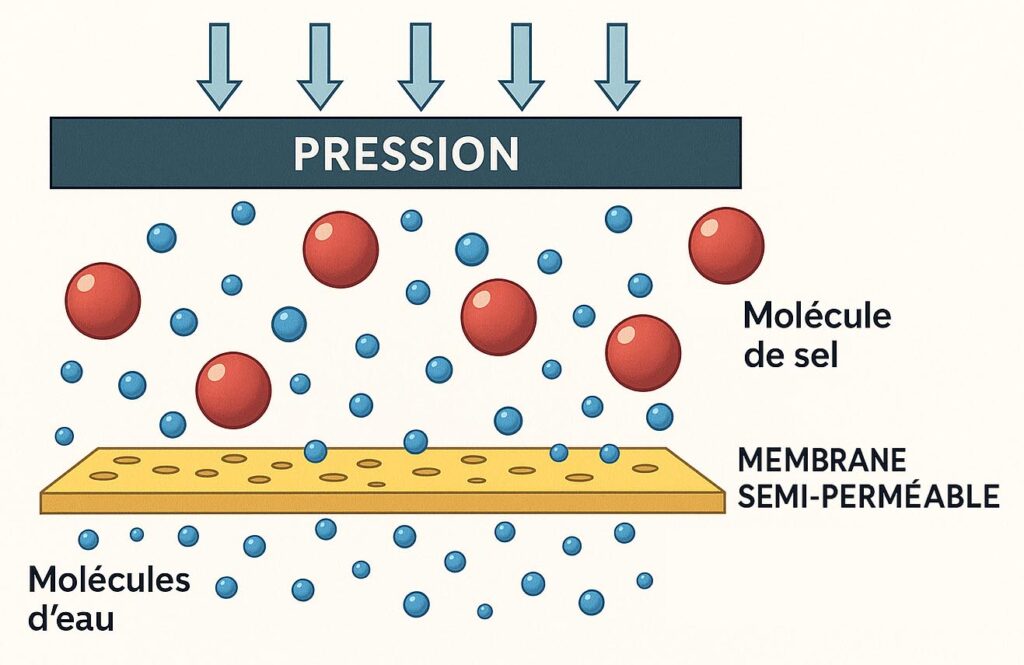
Reverse osmosis uses a semi-permeable membrane at high pressure (between 5 and 15 bars for domestic use, up to 70 bars for industrial). This membrane allows only water molecules to pass through, retaining virtually all dissolved salts, heavy metals, bacteria, viruses, and even substances like PFAS or nitrates.
The principle is based on reversing the natural osmosis phenomenon: instead of allowing water to migrate toward the more concentrated solution, water is forced through the membrane in the opposite direction, leaving behind a concentrate (or reject) loaded with pollutants. An RO unit typically produces between 50% and 75% of purified water, with the rest being discharged.
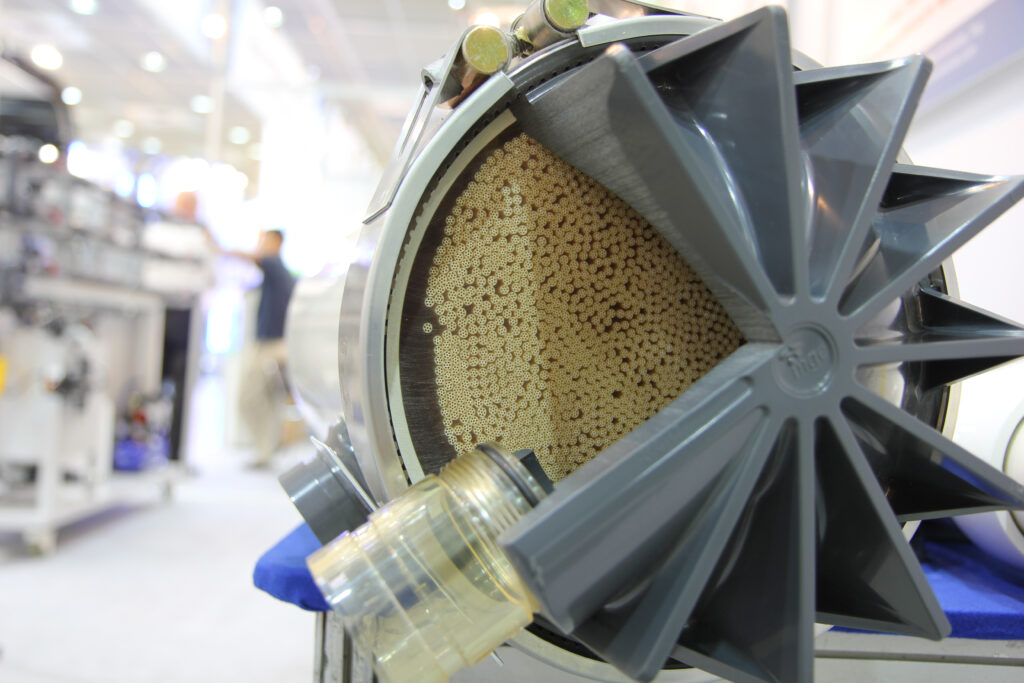
In practice, a reverse osmosis system typically includes a sediment prefilter, an activated carbon filter (to protect the membrane from chlorine), the RO membrane itself, and a post-filter to refine taste. The most common membranes are TFC (Thin Film Composite) type, with a filtration fineness of around 0.0001 micron.
Ultrafiltration
Ultrafiltration also uses a membrane, but with significantly larger pores: between 0.01 and 0.1 micron. It operates at low pressure (0.5 to 2 bars), making it more energy-efficient.
Its membranes effectively retain bacteria, viruses, colloids, proteins, and macromolecules, while allowing dissolved mineral salts to pass through. It is the technology of choice when microbiological safety is the priority, without the need to demineralize the water.
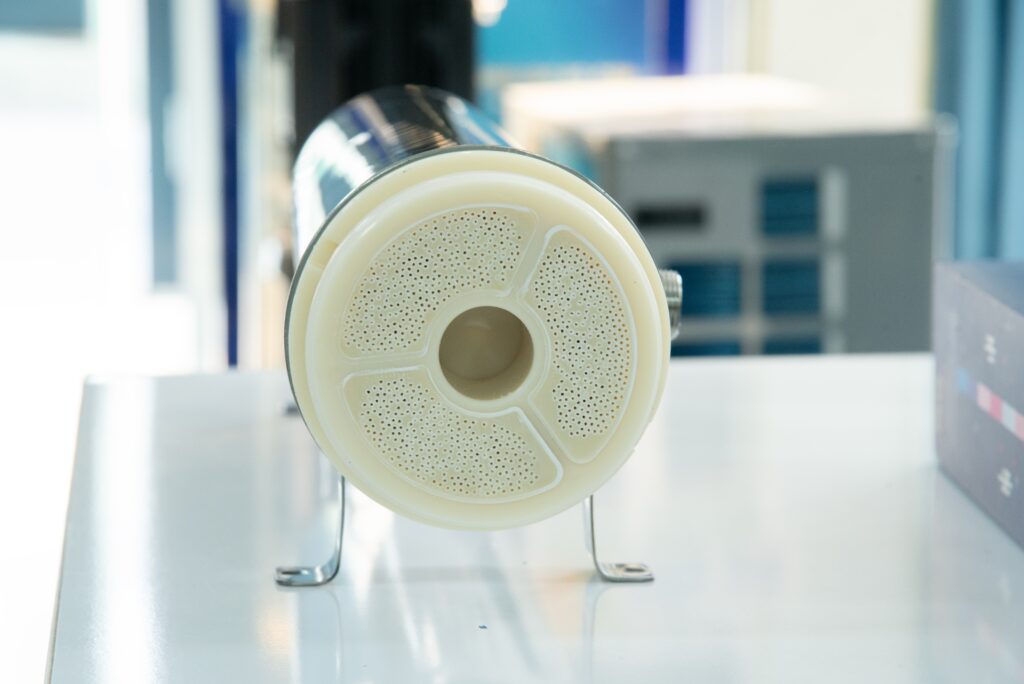
UF membranes come in hollow-fiber (most common), tubular, or flat configurations. They are cleaned by backwashing and support periodic chemical disinfection cycles.
Reverse osmosis — what it does:
- Removes dissolved salts, PFAS, and nitrates (up to 99%)
- Produces ultra-pure water suitable for demanding industrial processes
- Operates under high pressure and consumes more energy
- The filtered water is demineralized (sometimes requires remineralization)
Ultrafiltration — what it does:
- Removes bacteria, viruses, and particles (up to 99.99%)
- Retains essential minerals (calcium, magnesium)
- Operates at low pressure with better hydraulic recovery
- Water retains its natural mineral composition
2. Comparison table: reverse osmosis vs. ultrafiltration
| Criterion | Reverse osmosis (RO) | Ultrafiltration (UF) |
|---|---|---|
| Filtration fineness | 0.0001 micron | 0.01 to 0.1 micron |
| Operating pressure | 5 to 70 bars | 0.5 to 2 bars |
| Bacteria / viruses | Yes (eliminated) | Yes (eliminated) |
| Dissolved salts / TDS | Yes (95–99% rejection) | No (salts pass through) |
| PFAS | Yes (>90% removal) | No or partially |
| Nitrates | Yes (85–95%) | No |
| Heavy metals | Yes (>95%) | No |
| Minerals retained | No (demineralized water) | Yes |
| Hydraulic recovery | 50–75% (25 to 50% reject) | 90–95% |
| Energy consumption | High | Low |
| Backwashing | No (membrane replacement) | Yes (automatic cleaning) |
| Membrane lifespan | 2 to 5 years | 3 to 7 years |
| Investment cost | Medium to high | Medium |
| Main applications | Ultra-pure water, desalination, industry, laboratories | Water potabilization, pre-treatment, microbiological safety |
3. Strengths and Limitations of Each Technology
Reverse osmosis — When chemical purity is essential
Reverse osmosis is the reference technology when it comes to removing dissolved contaminants from water. It excels at eliminating salts, heavy metals, nitrates, fluorides, PFAS, and pharmaceutical residues. Its filtration fineness (0.0001 micron) makes it the most comprehensive system in terms of purification.
But this performance comes at a cost:
- A water rejection rate of 25 to 50% on average, or more for undersized installations or those without concentrate recovery
- Significant energy consumption, linked to the high pressure required
- Regular maintenance of prefilters and membrane replacement every 2 to 5 years, depending on inlet water quality
- Membrane fouling can become problematic if pre-treatment is insufficient—the presence of iron, manganese, or organic matter accelerates deterioration
Reverse osmosis produces demineralized water that may require remineralization for certain uses (drinking water, food processing), as well as pH stabilization to prevent corrosion of downstream pipes.
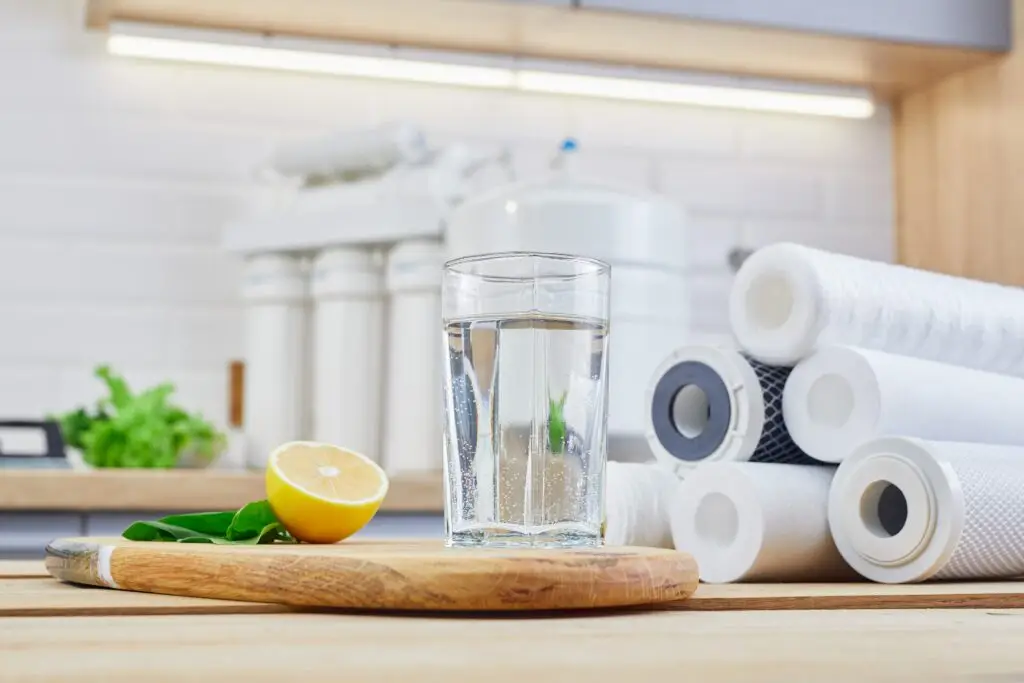
Ultrafiltration — When microbiological safety takes priority
Ultrafiltration is the ideal solution when the main concern is bacterial and virological safety of water, without the need to demineralize it. It provides an absolute physical barrier against microorganisms, with a removal rate exceeding 99.99% for bacteria and viruses.
Its advantages:
- Membrane purification at very low energy cost, operating at low pressure (0.5 to 2 bars)
- Conservation of essential minerals (calcium, magnesium, potassium), making water directly consumable without post-treatment
- Excellent hydraulic recovery (90 to 95%), with minimal reject
- Simplified maintenance through automatic backwashing and periodic chemical cleaning cycles
- The mechanical robustness of hollow fibers, which tolerate variations in inlet water quality
However, ultrafiltration does not remove dissolved salts, heavy metals, PFAS, nitrates, or pharmaceutical residues. If the source water contains these pollutants, UF alone is insufficient.
4. UF + RO: The winning combination for demanding installations
The combination of UF as pre-treatment + RO for final purification is now considered the reference for demanding installations. This architecture offers the best of both worlds:
- UF protects the reverse osmosis membrane by removing particles, bacteria, and colloids that cause fouling
- RO then ensures removal of dissolved salts, PFAS, nitrates, and other micropollutants
This approach allows:
- Extended lifespan of RO membranes (40 to 60% reduction in fouling)
- Reduced frequency of RO membrane chemical cleaning
- Stable system performance, even with variations in inlet water quality
- Lower operating costs long-term despite higher initial investment
This combination is found in municipal water treatment plants, critical industrial processes (pharmaceutical, electronics, food and beverage), and increasingly in mid-size professional installations.
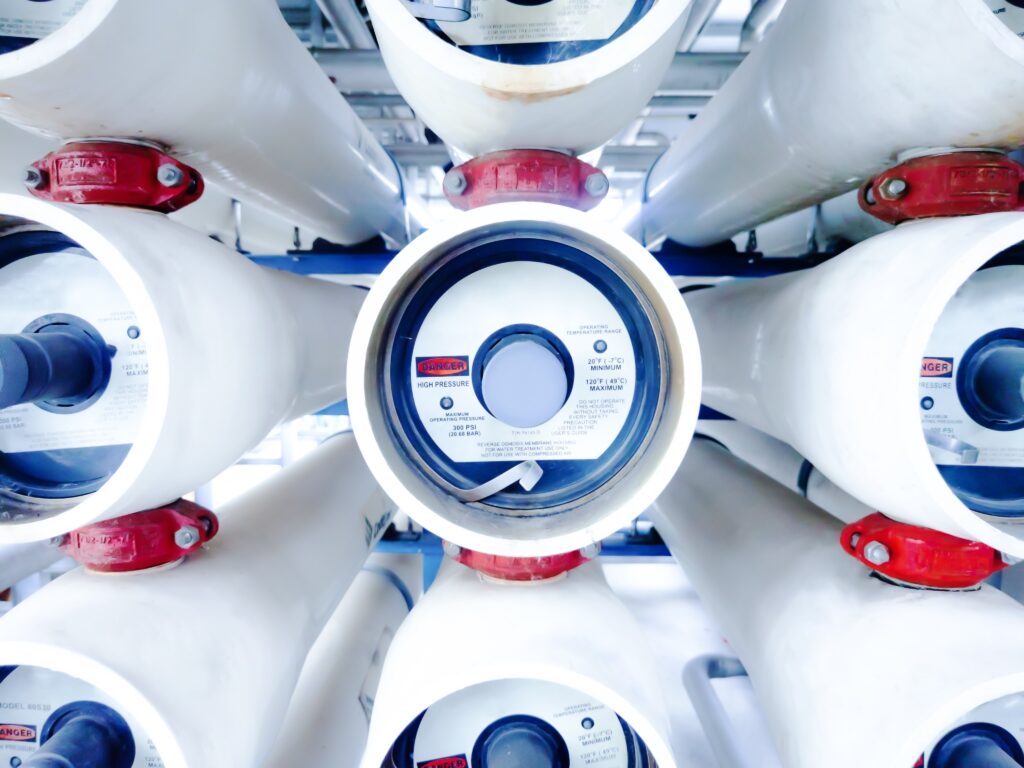
5. Belgian and French Context: When RO Becomes Essential
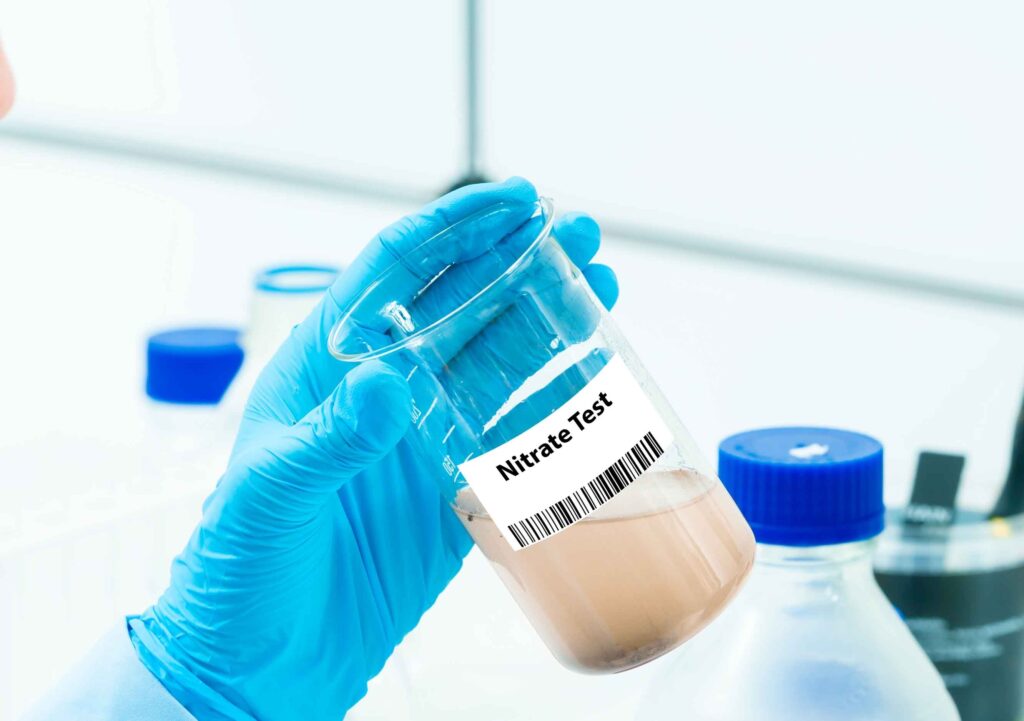
Nitrates: A major issue in agricultural zones
In Belgium (Flanders and Wallonia) as well as in northern France, intensive agricultural zones face nitrate levels in groundwater regularly exceeding regulatory thresholds. The European standard sets the limit at 50 mg/L, but many water sources exceed this threshold or approach it dangerously.
Ultrafiltration cannot remove nitrates (they pass through UF membranes). Only reverse osmosis provides sufficient rejection rates (85 to 95%) to bring the concentration below the regulatory threshold. This makes it essential in these contexts, whether for municipalities, campsites, farms, or food industries.
PFAS: The Regulatory Priority 2025-2030
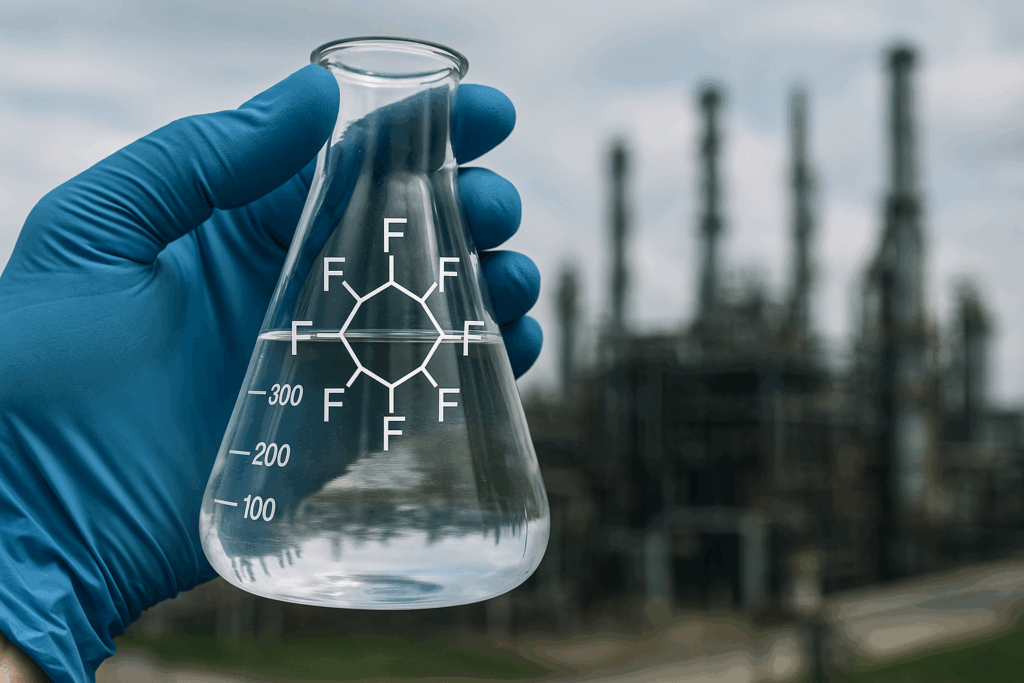
PFAS (per- and polyfluoroalkyl substances) are at the heart of regulatory developments. In Flanders and since January 12, 2026, the European Directive 2020/2184 sets a strict limit of 0.1 µg/L for the sum of PFAS and 0.5 µg/L for the total of PFAS in drinking water.
Facing this urgency, reverse osmosis is the proven technology that achieves these demanding thresholds. Activated carbon can complement the treatment, but its adsorption capacity is limited over time and its performance varies depending on the specific PFAS compounds targeted. The combination of activated carbon + reverse osmosis is considered the most effective combination for treating PFAS.
6. Summary: Reverse Osmosis, Ultrafiltration, or Both Combined
The choice between reverse osmosis and ultrafiltration depends on the nature of contaminants to be treated, your water quality objectives, and your regulatory context. Here are typical scenarios:
- Reverse Osmosis: Choose RO if your water contains dissolved salts, nitrates, PFAS, heavy metals, or pharmaceutical residues. It is the solution of choice for chemical purity and compliance with the strictest standards.
- Ultrafiltration: Prefer UF if your priority is microbiological safety (bacteria, viruses) while retaining water minerals. It is the most energy-efficient solution and minimizes water waste.
- UF + RO Combination: The best compromise for demanding installations that require both absolute microbiological safety and removal of dissolved pollutants. This combination extends membrane lifespan and reduces long-term operating costs.
Regardless of the technology chosen, proper sizing and appropriate pre-treatment are essential to guarantee optimal performance over time. Do not hesitate to consult our technical teams for a personalized analysis of your project.